
{主关键词}
刑事侦缉档案2
GT Voice: Chinese investment could help Germany stabilize its talent base_我的网站

A | 科学家们不知道为什么地球磁场运动得很快。

B |
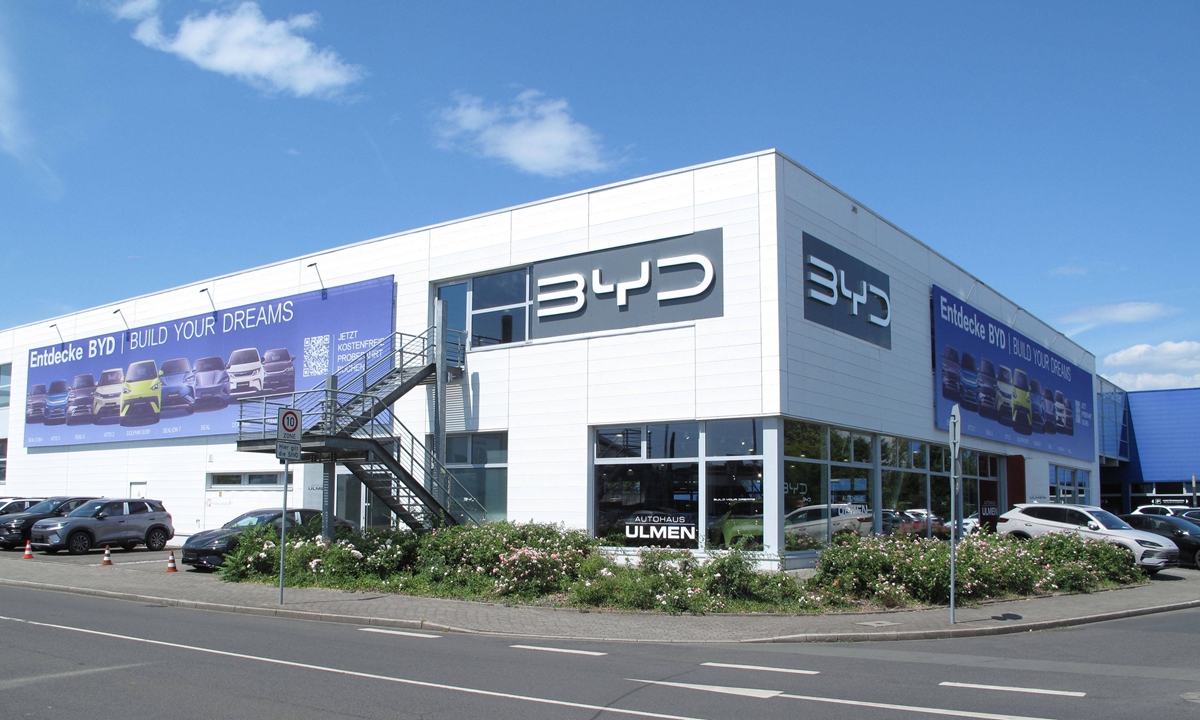
Germany's industrial woes have increasingly become a hot topic of discussion. The latest Engineer Monitor report from professional association Verein Deutscher Ingenieure and the German Economic Institute offers a new look at the issue.
The report showed that there were 58,392 unemployed individuals in the engineering and information technology (IT) professions in the fourth quarter of 2025, the highest level since the survey began in 2011.
Compared with the previous year, the number of unemployed increased by 16.7 percent, according to German media reports on Sunday.
These figures lay bare the challenges confronting the country's manufacturing sector. The reasons for the industrial woes are multiple. The soaring energy costs caused by geopolitical conflicts, the decline in exports caused by rising protectionism and low external demand, and the structural pain caused by industrial chain restructuring are all squeezing the space of German manufacturing.
Manufacturing is the backbone of Germany's economy, and engineers and IT specialists constitute the core force that sustains this pillar. For decades, the country's reputation for "Made in Germany" excellence was built on the expertise of these skilled professionals. Regardless of the macroeconomic ups and downs, preserving the stability and continuity of its industrial talent pool represents a strategic bottom line for Germany.
Should large numbers of highly skilled technical professionals leave the industry or sit idle, industrial research and development (R&D) and production cycles will be disrupted. Over the longer term, such a waste of human capital will erode Germany's industrial innovation capacity and, ultimately, undermine the foundations of its global competitiveness.
In this context, the urgent task for Germany is to create sufficient quality positions for its technical talent. Should it fail to do so in the short term, then Germany needs to embrace a more open‑minded development approach. Shoring up its manufacturing base cannot be achieved solely through protecting domestic companies; it also requires a significant expansion of effective investment to create enough high‑quality jobs that can attract and retain skilled talent.
This is exactly where China‑Germany cooperation could deliver tangible results. According to the FDI Report 2025 published by Germany Trade & Invest (GTAI), the total number of foreign investment projects in Germany fell 9.3 percent overall to 1,564 in 2025. Nonetheless, Chinese companies became the largest source of foreign investment projects in Germany in 2025, overtaking the US for the first time since 2017.
Chinese companies launched 228 investment projects in Germany in 2025, up 14.6 percent year-on-year. More than one in five Chinese investment projects involved production and R&D activities, above the overall average for foreign investment projects in Germany. This is a sign that Chinese firms are deepening their integration into the local industrial base, according to GTAI.
Observers noted the trend, pointing out that China is becoming an important force in driving German re‑industrialization. In industries where Germany urgently needs to rebuild its competitive edge, such as electric vehicles, batteries, energy technology, digital manufacturing, and automation, China is emerging as an increasingly significant complementary partner. In these critical areas that will determine industrial competitiveness in the coming decades, the relationship between China and Germany is not merely one of rivalry; there are clear and substantial complementarities. Germany still boasts world‑leading engineering expertise, precision manufacturing capabilities, and a strategic location at the heart of the European market.
China has complete and highly integrated supply chains for raw materials and intermediate goods and large capacity for increasing production. When Chinese automakers set up R&D centers in Germany, or when Chinese tech firms collaborate with German factories to build smart production lines, the beneficiaries are not only the Chinese companies but also the German engineers who would otherwise face redundancy.
Cross‑border investment cannot flourish without a sound policy environment. Chinese companies are apparently willing to develop in Germany, but it can only happen on the premise that the German side provides a fair, reasonable and predictable business environment, reduces non-market interference in commercial activities, and allows capital to operate in accordance with market rules.
If the two countries are able to reach a deeper level of cooperation in investment, many of Germany's trade‑related concerns may well find more pragmatic solutions. The deep integration of industrial value chains would facilitate two‑way trade, creating renewed momentum for German exports of machinery, vehicles, chemicals, and other competitive products to China.
。研究人员说,磁极正在从加拿大“滑翔”到西伯利亚。磁北极的运动是显而易见的,世界各地的研究人员都渴望更新世界地磁模型。世界地磁模型是所有现代导航系统的基础,包括海军导航系统和手机上的谷歌地图。最新的世界地磁模型,于2015年出版,相信到2020年可以使用。但研究人员说,磁场变化如此之快,他们必须提前修改世界地磁模型。世界地磁模型原定于1月15日更新,但由于美国政府的关闭,时间不得不推迟到1月30日。

C | 地磁场在不断变化。

D | 小科学普及:地磁极(来自维基百科)人类首先根据地球两极的方向来定义磁铁的南北极,而不是相反:磁铁的北极是指磁针自由旋转时转向地磁北极的末端。

E | 由于两块磁铁的南北极相互吸引,这就意味着地磁场的北极实际上是地磁场的南极(即地磁场线指向地球中心的地方)。南北磁极一般位于地极附近,但其位置随地质时间的变化而变化较大。这种变化太慢,无法干扰罗盘的日常使用。然而,平均每几十万年就会发生一次地磁反转,即南北极突然(与地质时间尺度相比)相互交换。

F |
Current article:http://294r3i.bainangmieruopanglaomen.sbs/news/20260826_2674325.pptx
Published on:07:14:13
- 上一篇:下游需求依然没有亮点合成橡胶期货盘面表现偏弱
- 下一篇:小米赛车开始预下载
- 730466中国认真“收废品”背后藏着顶级资源布局,中国认真“收废品”背后藏着顶级资源布局
- 77946美国大选4月形势:民调与初选
- 91051Strong film lineup boosts China's summer box office
- 2987201进一步加强汛期水环境监管
- 99600Bluesky正在为Twitter开发一款基于去中心化AT协议的应用程序
- 76208买越野车做游记?浅游高山-飞驒-名古屋
- 9203更强大!谷歌FI运营商服务推出下一代短消息功能rcs
- 80504量化交易软件QMT、ptrade超详细对比!本地运行和云端托管的区别!
- 460393Suspect in Holloway disappearance to appear in federal court for extortion case
- 6352国际矿物学协会大会举行 全球学者共话“矿物万象”,国际矿物学协会大会举行 全球学者共话“矿物万象”
- 571838에그이즈커밍 대표 "우리 회사는 '지락실' 전과 후로 나뉜다"
- 937PriceSeek提醒:金川8月26日上调镍出厂价600元/吨
- 70885지적장애인 성폭력 벌어진 ‘지옥’…노동부 인증 ‘표준사업장’이었다
- 6154163到2030年率先基本实现农业农村现代化 浙江“三农”工作这样干
- 48239多个站口禁止车辆上道!河北高速最新路况
- 825925球探认可湖人休赛期操作:围绕卢卡打造均衡舰队
- 888中方:当前斯威士兰安全形势复杂,电诈网赌犯罪活动猖獗
- 91807机器人在WAIC扎堆“干活”,距离入户养老还有多远
- 70220向“智”而行 为高质量发展蓄势赋能
- 481447工信部:“十四五”期间,我国规模以上工业增加值年均增长5.9%
- 10325Why Was Manish Malhotra Angry at Farah Khan During Fevicol Se's Filming?
- 9282‘이준석 지도부’ 사퇴…개혁신당 2년 7개월여 만에 존립 ‘흔들’
我的网站热门国内
- Copyright @ 2016-2017 我的网站 版权所有